Write, rinse, repeat


Hello, dear reader, and welcome to another issue of AI, Law, and Otter Things! It has been a bit over three weeks since the previous newsletter, but that delay is largely for good reasons. After a slow start to the year, my two remaining brain cells seem to be back on speaking terms with one another, so I've managed to get some writing done. Also, I had the opportunity to speak at three events:
- On 28 January, I was in Lisbon to receive the Abreu Advogados Award, granted by a leading Portuguese law firm to innovative legal research. There, I had the opportunity to present my PhD thesis on technology neutrality and discuss how I'm building on that work for the book.
- On 3 February, I presented my EDPB SPE training module on AI and data protection to the Global PETs Network, managed by the Future of Privacy Forum.
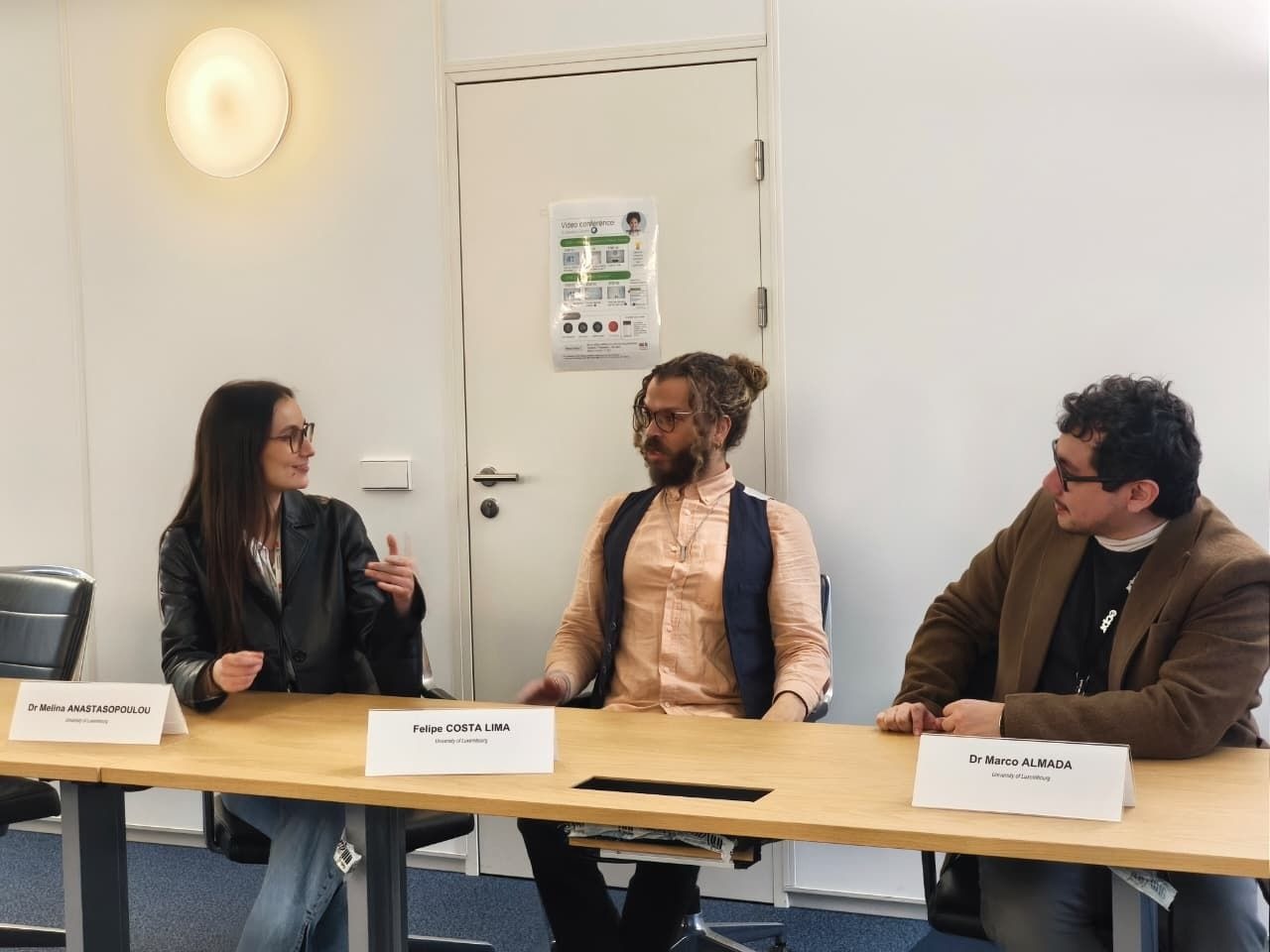
- On 10 February, I acted as a discussant at the workshop 'Law, Power & Development in the Global South: Digital & Agrarian Sovereignty in Laos'. There, I had the opportunity to share some thoughts on fascinating work being developed by Melina Anastasopoulou and Felipe Costa Lima, and learn more about the challenges and recent developments of law in Laos.
In the rest of today's issue, I want to talk about the revision process. After that, you'll find the usual: some potentially interesting recommendations, a few events and opportunities, and some cute otters by the end of the newsletter. Hope you enjoy!
On revisions
Frequent readers of this newsletter might have noticed that attention to detail is not my strong suit. As somebody who is prone to paralysis and excessive optimization—it is not for nothing that my nom de plume for many years was 'Asno de Buridan'—the only way I can get something done is by not obsessing with getting everything right at first. So, unless I'm writing something that can be done in a rather sloppy way (as is the case for this newsletter), I usually leave myself some time to edit things and fix my own messes.
Learning how to do that helped me a lot, not just psychologically but also in terms of the quality of my writing. One of the most important things I learned from William Germano's On Revision (and from Raul Pacheco-Vega's fantastic blogging) is that one should be seen this kind of editing as an integral part of the writing process. And, because my experience with blogging and technical writing in corporate contexts have taught me how to produce readable-ish texts quickly, I find that most of my time is now dedicated to reworking whatever blobs of text I had produced in previous steps. Even though I don't fancy myself a particularly stylish writer, doing so has helped me to produce clearer outputs—and to mitigate a bit my sloppiness of thought.
Which brings me to the operational question: how to revise? So far, I have tried to read what I can about the subject, trying bits and pieces to see what I can incorporate into my own workflows. Laura Portwood-Stacer, whose book on writing academic book proposals has helped me a lot so far, has a more recent manuscript on developmental editing, which I still have to read. Still, one of my challenges in applying those techniques is trying to avoid boredom.
Yesterday, an odd set of circumstances pushed me towards something fun. I had to prepare a text for a Spanish-language presentation and, given my current time constraints, I decided to translate the latest draft of my works in progress. Doing so will allow me to gather feedback from a different audience from the ones that have already been exposed to this particular work. And it also helped me to see the original draft with fresh eyes, so I could already introduce some changes to the arguments and the presentation which will go back to the English-language draft. Of course, this does not seem to be a particularly scalable method for revising, but it certainly was fun.
Recommendations
I am a latecomer to the whole Bad Bunny phenomenon, but his Superb Owl halftime show was something else. And, as Steven Nelson skeeted, "If Bad Bunny can cover the history of Puerto Rico, colonialism, transatlantic slavery, hemispheric consciousness, as well as contemporary life and politics in under 14 minutes, you can do your 15- or 20-minute conference presentation with time to spare."
As for academic readings, I'd like to recommend a few things y'all might enjoy:
- Andrea Bertolini and others, ‘The Brussels Sphinx’s Riddle. What Is a High-Risk AI System?’ [2025] Rivista di diritto dei media.
- EDPB-EDPS Joint opinion 2/2026 on the Proposal for a Regulation as regards the simplification of the digital legislative framework (Digital Omnibus)
- Dermot Hodson and others, Banking on Europe: Why the EU Became a Sovereign-Style Borrower and How It Should Be Held to Account (1st edn, Oxford University Press 2026).
- Vivek Krishnamurthy, ‘The Sovereign AI Myth’ (Social Science Research Network, 1 February 2026).
- Moritz Mihatsch and Michael Mulligan, Shifting Sovereignties: A Global History of a Concept in Practice (De Gruyter Oldenbourg 2025).
- Leonore ten Hulsen, ‘Digital Fixes and Techno-Solutionism: The EU’s Tech-Based Battle against Child Sexual Abuse’ (2025) 16 New Journal of European Criminal Law 154.
- Philipp Trein, Nicole Lemke and Frédéric Varone, ‘Generalist and Specialist Roles of Policy Actors: Insights from Preferences on AI Regulation’ [2026] Public Policy and Administration 09520767251411201.
- Ellen Vos and Luca Knuth, ‘Deregulating New Genomic Techniques: The Challenge of Ambiguous Objects’ [2025] Croatian Yearbook of European Law and Policy.
Opportunities
Disclaimer: as usual, I am gathering these links purely for convenience and because I think they might be of interest to readers of this newsletter. Unless I explicitly say otherwise, I am not involved with any of the selection processes indicated below.
Next week, we will host a book launch for a book edited by my boss Niovi Vavoula with Lilian Tsourdi and Valsamis Mitsilegas, Intertwining Criminal Justice and Immigration Control in the EU. It will take place on 19 February, from 16:00 to 18:30 Luxembourg time. Join us, either in person or remotely!
On 3 March, I will present my ongoing research on common specifications to the EU Law Discussion Group at Lund University. For more information, contact the organizers at euldiscussiongroup@jur.lu.se.
Cambridge's Bennett School of Public Policy is hiring professors of public policy at various levels (two Assistants, one Associate, one full), partly to support their upcoming masters programme on digital policy. Applications are due by 22 February.
Urs Gasser at TU Munich is hiring a PhD researcher to work on the governance of far-upstream technologies, such as quantum, neurotech, or fusion. Applications are due by 24 February.
The School of Law and Social Justice at the University of Liverpool is recruiting eight (!) Lecturers in Law, who would start in the 2026-2027 academic year. Applications are due by 26 February.
TriCON and ICON-S have opened applications for ICON-S-Pre/ICON Esprit. This early career workshop for junior scholars working on public law will take place on 27th-28th of June in Trinity College Dublin, right before the main ICON-S conference. Applications are due by 1 March.
The Institute of Tax Law (KU Leuven), with partner universities across Europe, will host the 16th Doctoral Seminar on EU and International Tax Law. Applications are due by 31 March.
And now, the otter

Hope you found something interesting above, and please consider subscribing if you haven’t done so already:
Thanks for your attention! Do not hesitate to hit “reply” to this email or contact me elsewhere to discuss some topic I raise in the newsletter. Likewise, let me know if there is a job opening, event, or publication that might be of interest to me or to the readers of this newsletter. Hope to see you next time!


